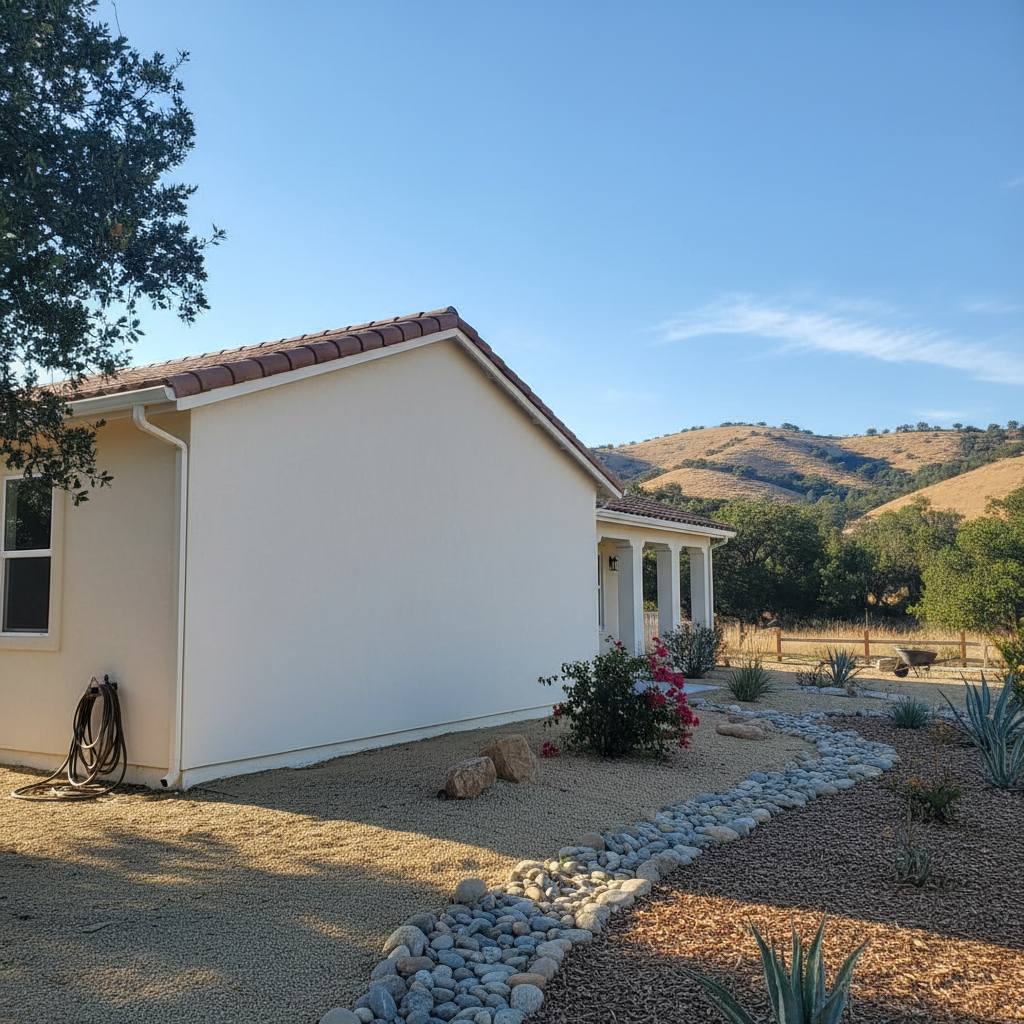
Alright, let's talk about EIFS, or Exterior Insulation and Finish Systems. You might know it better as synthetic stucco. It's a really popular choice for many reasons, especially here in Temecula, where people are always thinking about energy efficiency. But what's it actually going to cost you to get it put in? I'm going to break that down for you.
What Makes EIFS Pricing Go Up or Down?
It's never just one flat number, is it? A few big things really push the price of an EIFS installation one way or the other:
- The Size of the Job: This is probably the biggest factor. A small repair or an accent wall will obviously cost less than re-siding an entire 3,000 sq ft home in Redhawk. We usually price by the square foot, but smaller jobs might have a higher per-square-foot cost because of setup and getting our crew and gear there.
- EIFS System Type: Not all EIFS are created equal. Some are drainable systems, which we generally recommend, especially in a place like Temecula where we get those heavy winter rains. These systems are designed to handle any moisture that sneaks behind the EIFS. They're usually a bit more expensive to install because they use more components and take a more careful application process. Non-drainable systems are cheaper upfront, but they can cause bigger headaches later on if water gets trapped.
- Insulation Thickness: The 'I' in EIFS stands for insulation, after all. The thicker the insulation board (usually EPS foam), the better the R-value, and the more you'll save on your energy bills. But thicker foam costs more and takes a little more effort to install. Standard thickness is typically 1-2 inches, but you can definitely go thicker.
- Architectural Details: Got a lot of intricate trim, banding, quoins, or custom shapes? These details look fantastic, but they demand a lot more labor and specialized foam cutting and shaping. A flat, simple wall will always be cheaper per square foot than a wall with a bunch of pop-outs and decorative elements.
- Finish Texture and Color: Standard textures, like a sand finish or a fine aggregate, are pretty straightforward. If you want something custom, a very coarse texture, or a multi-color finish, that'll add to the cost. Some colors also have different pigment costs, which is kind of interesting.
- Accessibility: Is it a two-story house with tricky access? Will we need extensive scaffolding or lifts? That adds to the labor and equipment costs. A single-story ranch home is usually easier and quicker to work on.
- Existing Substrate Condition: If we're going over existing sheathing that's in rough shape, or if there's old siding that needs to be removed and disposed of, that's extra work and cost.
Typical EIFS Cost Ranges in Temecula
Okay, let's get down to some actual numbers. For a full EIFS installation on a new build or a complete re-side, you're generally looking at a range of $10 to $20 per square foot. This includes both materials and labor for a standard system.
- Basic, simpler jobs: For a straightforward, single-story home with minimal architectural details and a standard finish, you might be closer to the $10-$14 per square foot range.
- More complex projects: If you've got a two-story home, a drainable system, thicker insulation, or a good amount of architectural details, you're probably looking at $15-$20 per square foot.
- Small repairs or accent areas: These can sometimes have a higher per-square-foot cost, say $20-$30+ per square foot, because of the fixed costs for mobilization and setup. A small patch might have a minimum charge of a few hundred bucks, even if it's only 10 square feet.
So, for an average 2,000 square foot house, you could be looking at anywhere from $20,000 to $40,000 for a complete EIFS system. It's a significant investment, no doubt, but the energy savings and curb appeal can really pay off in the long run.
What Should Be in Your EIFS Quote?
When you get a quote from us at Temecula Stucco & Plastering, or any other reputable contractor, make sure it's detailed. It should clearly break down:
- Square footage: The total area being covered.
- EIFS System Type: Is it a drainable system? What brand?
- Insulation: Type and thickness of the EPS foam.
- Base Coat and Mesh: What kind of base coat and reinforcing mesh are being used.
- Finish Coat: Brand, type, texture, and color.
- Architectural Details: Any specific trim, bands, or custom work should be itemized.
- Prep Work: What's included for surface preparation.
- Waste Removal: Who's responsible for hauling away debris.
- Warranty: What kind of warranty is offered on materials and labor.
- Payment Schedule: How payments are structured throughout the project.
A good quote leaves no room for surprises. If it's just a single number on a napkin, well, walk away.
How to Avoid Overpaying for EIFS
Nobody wants to get ripped off, especially when you're making a big investment in your home. Here's my advice:
- Get Multiple Bids: This is a no-brainer. Get at least three detailed quotes from different licensed and insured contractors. Don't just compare the bottom line; compare what's actually included in each bid.
- Check References and Reviews: See what other homeowners in Temecula are saying. Look for contractors with a solid track record, specifically with EIFS.
- Understand the System: Ask questions. A good contractor will be happy to explain the drainable system, the components, and why they recommend certain materials. If they can't explain it clearly, that's a red flag.
- Don't Go for the Cheapest Bid Automatically: The lowest price often means corners are being cut, either in materials or labor. EIFS is a specialized system; proper installation is crucial for its performance and longevity. A cheap job now can cost you a fortune in water damage repairs later.
- Verify Licenses and Insurance: Make sure they're properly licensed by the CSLB (California Contractors State License Board) and have general liability and workers' comp insurance. You don't want to be liable if someone gets hurt on your property, do you?
EIFS is a great product when installed correctly. It offers fantastic insulation, a durable finish, and a lot of design flexibility. Just do your homework, ask the right questions, and choose a contractor who truly knows their stuff.