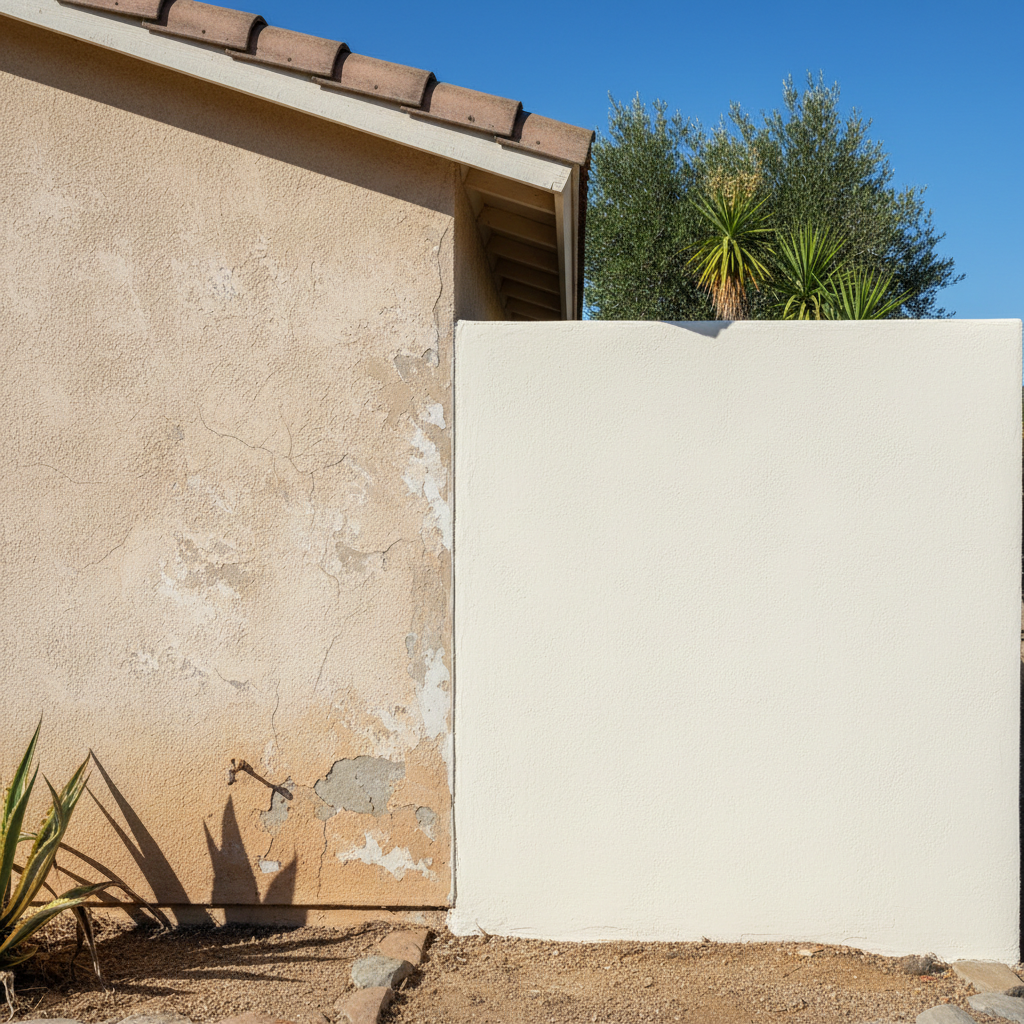
Thinking about new stucco for your house? That's a pretty big decision, and you've got a couple of main options to think about: the classic three-coat system or the more modern one-coat approach. I've been doing this work for a long time here in Temecula, and I've seen both done really well and, honestly, not so well. Let's dig into what each one actually means for your home.
So, What's the Deal with 3-Coat Stucco?
This is the traditional way, the old-school method that's been around forever. When we talk about three-coat stucco, we're talking about three distinct layers applied right onto your home's sheathing. First, you get a scratch coat; we literally scratch it up to give the next layer something to grab onto. Then comes the brown coat, which builds up the thickness and gets everything nice and level. Finally, you get the finish coat, which is what you actually see – the color and texture, you know?
Why do people still choose this method? Well, for one, it's incredibly durable. You're basically building up a solid, thick shell on your house, like a rock-solid armor. This thickness also gives it excellent impact resistance. If a kid's bike happens to hit the side of the house, you're less likely to see a big dent compared to thinner systems. It's also fantastic for sound dampening and insulation because of its sheer mass. Plus, it breathes really well, which is important for preventing moisture issues, especially with our hot, dry summers and those occasional heavy rains that can sometimes push moisture into walls if things aren't managed right.
And What About the 1-Coat Stucco System?
Now, the one-coat system, sometimes called a 'modified' or 'synthetic' stucco, is a different animal altogether. Don't let the name completely fool you; it's not just one super thick layer. It's usually a base coat that combines cement, polymers, and sometimes fibers, applied over a drainage mat and a waterproof barrier. Then, a separate finish coat goes on top. So, it's more like a two-step process, but the base coat is designed to do the work of both the scratch and brown coats in one go.
The big draw here is often speed and cost. Because there are fewer application steps, it can go on faster, which means less labor time. The materials themselves can sometimes be a bit pricier per bag, but the overall installation cost often comes out lower. It's also more flexible than traditional stucco, meaning it can handle minor building movements and temperature fluctuations without cracking as easily. This flexibility is a real plus in areas with shifting soils, though that's less of a concern for most of us on the solid ground of Temecula's older neighborhoods like Meadowview or Redhawk.
Cost: How Do They Compare?
Generally, 1-coat stucco will be less expensive upfront. You're looking at potentially 15-25% less than a full three-coat system for materials and labor. This isn't a hard and fast rule, as project specifics always play a role, but it's a good ballpark figure. Three-coat requires more material, more time on the wall, and often more specialized labor, plain and simple.
Durability & Maintenance
This is where the differences really start to show. Traditional 3-coat stucco, when done right, is a tank. It's incredibly hard and resistant to physical damage. It's also very breathable, which helps manage moisture. Maintenance is usually limited to cleaning and occasionally patching small cracks that might appear over many years due to settling or extreme weather. These cracks are usually hairline and easy to fix, thankfully.
One-coat stucco is durable in its own way, primarily because it's so flexible. It's less prone to the hairline cracking you might see in traditional stucco. However, because it's thinner, it's generally less impact-resistant. A hard knock can create a bigger, more noticeable dent or hole. Moisture management is also critical with 1-coat systems. If the underlying barrier or drainage isn't perfect, and water gets behind it, it can be tougher to dry out because the system itself is less permeable. This is why proper installation with a good drainage plane is absolutely non-negotiable; you really can't cut corners here.
Appearance: Can You Tell the Difference?
For the average homeowner, the final look can be very similar. Both systems offer a wide range of colors and textures. The finish coat is what gives you that aesthetic appeal. If you're going for a super smooth, modern look, both can achieve it. If you want a heavy, rustic texture, both can do that too. The key is the skill of the applicator and the quality of the finish material, honestly.
My Recommendation for Temecula Homeowners
Alright, so what's the verdict for our homes here in Temecula? Given our climate – hot, dry, with occasional strong winds and the need for good thermal performance – I lean towards the traditional 3-coat stucco. Yes, it's a bigger investment upfront, but the long-term benefits in terms of durability, impact resistance, and inherent moisture management are tough to beat. It's a time-tested system that holds up incredibly well to our local conditions.
That said, a well-installed 1-coat system is also a perfectly viable option, especially if budget is your main concern. But you absolutely, positively need to make sure your contractor understands the critical importance of the drainage plane and proper flashing. Shortcuts here can lead to big problems down the road, and I've seen some real headaches from poorly installed synthetic systems, believe me.
At Temecula Stucco & Plastering, we work with both, and we're happy to walk you through the specifics for your home. Ultimately, it comes down to what you prioritize: initial cost savings or maximum long-term resilience. Either way, make sure you're working with someone who knows their stuff and won't cut corners on the details.