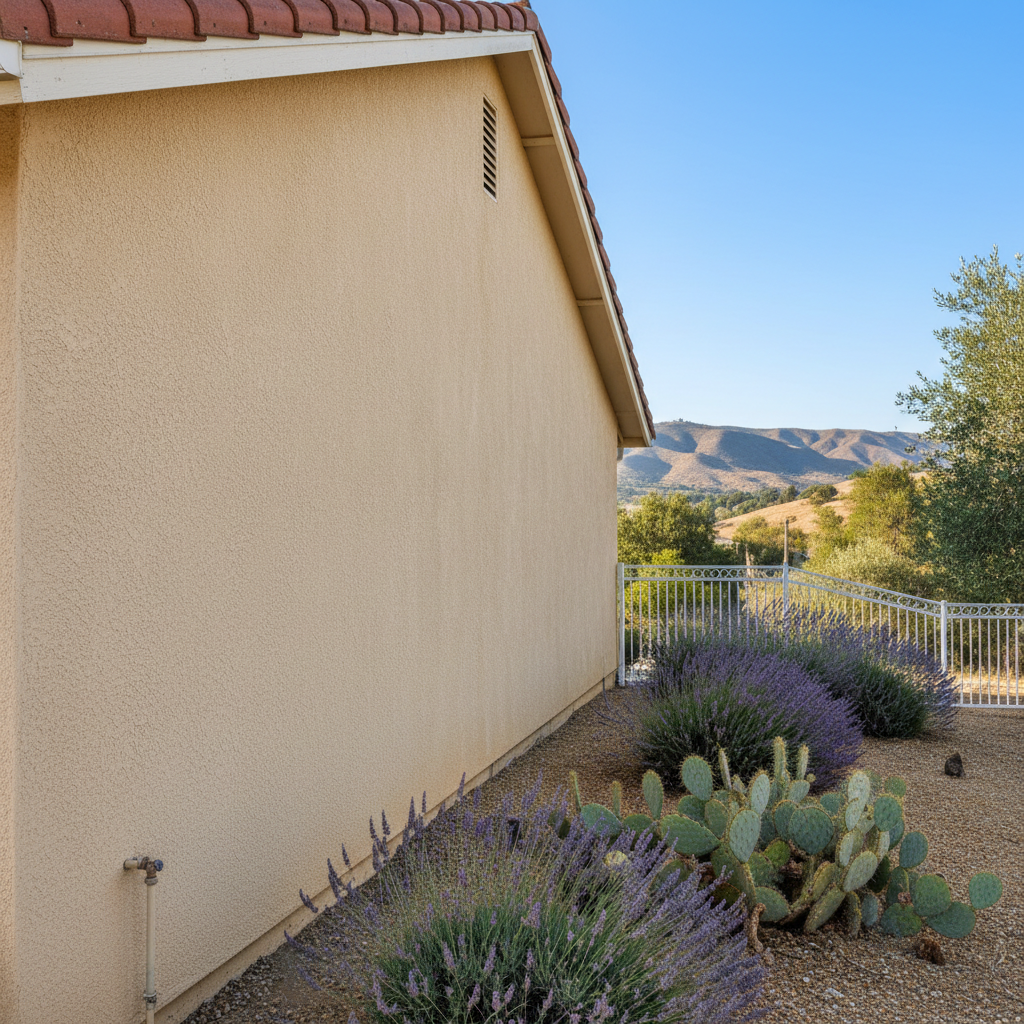
Think stucco is a "set it and forget it" kind of exterior? Not really. While it's tough – especially the traditional 3-coat stuff we often put on homes here in Temecula – it still needs a little attention to truly last. You've invested good money in your home's exterior, so let's talk about how to keep that stucco looking great and performing its best for decades to come.
Making Your Stucco Last Longer
The biggest thing you can do to make your stucco last is pretty simple: keep water out. Sounds obvious, right? But water is stucco's number one enemy. If moisture gets behind the finish, it can cause all sorts of headaches, from bubbling and cracking to more serious structural issues. That's why proper drainage around your home is so important. Make sure your sprinklers aren't constantly hitting the stucco, and check that your gutters are clean and directing water away from the foundation.
Another big one? Regular cleaning. Dust, dirt, and even mildew can build up, especially on north-facing walls that don't get as much sun. A gentle wash with a garden hose and a soft brush, maybe some mild detergent for tougher spots, can do wonders. Just don't go crazy with a high-pressure washer; you can actually damage the stucco surface if you're not careful. I've seen folks blast off the finish coat trying to clean it, and that's a repair job you definitely want to avoid.
What Regular Maintenance Looks Like
For most Temecula homeowners, regular stucco maintenance isn't a huge chore. I'd say once or twice a year, just take a walk around your house. Get up close and personal with your walls. Look for anything that seems off. This isn't about being an expert; it's about noticing changes.
- Check your caulking: Around windows, doors, and where the stucco meets other materials (like trim or the roofline), the caulk can dry out and crack over time. Our hot, dry summers here in the Valley can really bake that stuff, you know? If you see gaps, re-caulk them. It's a cheap fix that prevents water from getting in.
- Inspect for cracks: Small hairline cracks are often normal, especially with temperature fluctuations. But if you see cracks wider than a credit card, or if they're running in a spiderweb pattern, those need attention.
- Look at the foundation line: Make sure there's a good 4-6 inch clearance between the bottom of your stucco and the soil. If dirt or landscaping is piled up against the stucco, it's a direct invitation for moisture and pests.
- Keep an eye on plants: Vines growing directly on your stucco might look charming, but they can trap moisture and even damage the surface with their tendrils. Trim them back.
Warning Signs of Problems
Beyond those regular checks, there are some definite red flags that tell you something's not right. Don't ignore these; they usually get worse, not better, on their own.
- Stains or discoloration: Dark streaks, especially under windows or near the roof, often indicate water is running where it shouldn't be. Green or black patches could be mold or mildew, which means moisture is present.
- Bulging or soft spots: If you press on the stucco and it feels soft, or you see areas that are clearly bulging out, that's a serious sign of water damage behind the surface. This usually means the lath or sheathing underneath is compromised.
- Peeling or flaking paint/stucco: If the top layer of stucco or paint is peeling off in sheets, it's a sign of poor adhesion, often due to moisture or improper application.
- Cracks that are growing: A small crack you noticed last month is now twice as long or wider? That's a problem that needs to be addressed before it becomes a bigger repair.
When to Call a Professional
You can handle a lot of the basic maintenance yourself, like cleaning or re-caulking a small area. But there are times when you really need to bring in someone who knows what they're doing. If you see any of those serious warning signs – big cracks, bulging, widespread discoloration, or soft spots – it's time to call a professional stucco contractor. Don't try to patch over serious water damage; you'll just be putting a band-aid on a broken leg.
Here at Temecula Stucco & Plastering, we've seen it all. We can properly diagnose the issue, whether it's a simple crack repair or something more involved like addressing underlying water damage. Getting it fixed right the first time saves you money and headaches down the road. It's better to be proactive than to wait until a small problem turns into a major renovation.