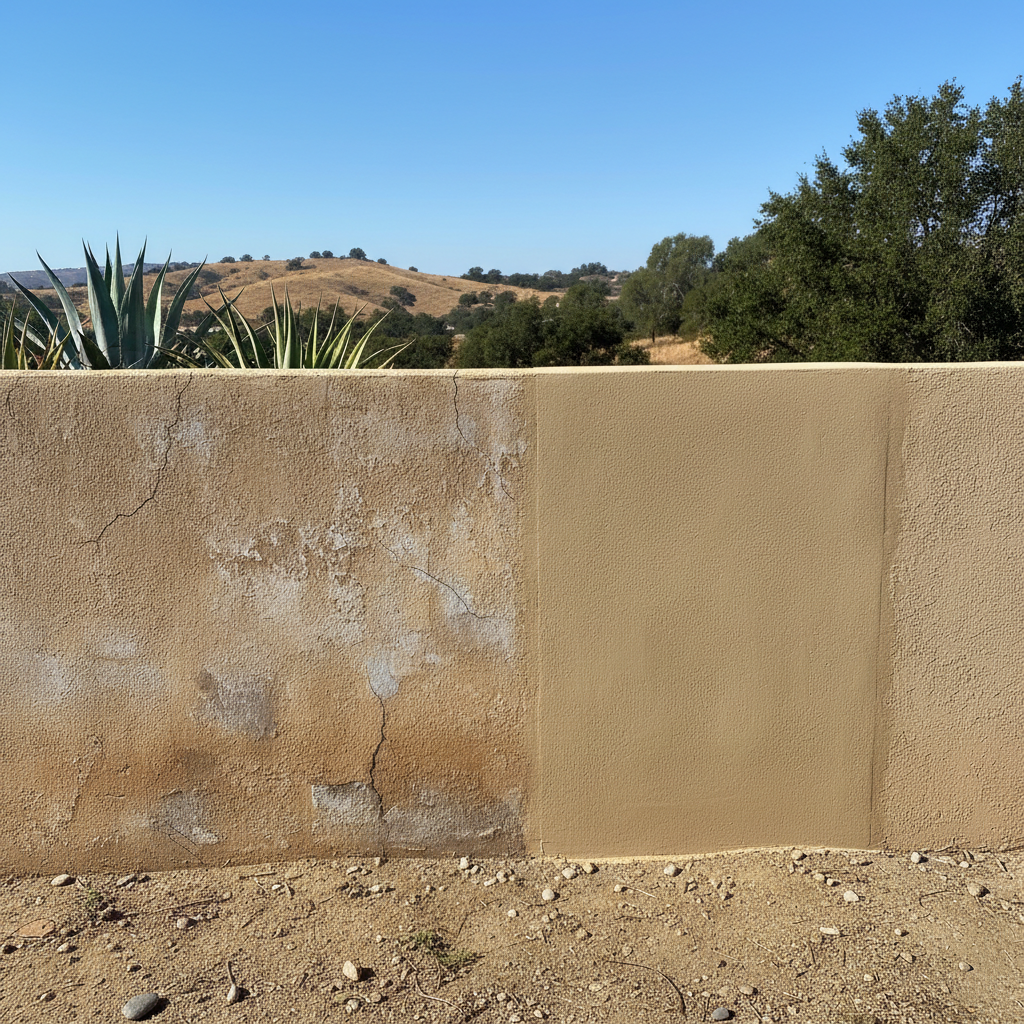
Alright, let's talk about stucco repair. Maybe you've got some cracks, a hole from a rogue sprinkler head, or just general wear and tear. When it's time to fix things up, you're usually looking at two main options: a spot patch or a full re-dash. I see a lot of folks in places like the Redhawk community trying to figure out which way to go, and honestly, it's not always a simple choice.
Spot Patching: The Quick Fix
So, what exactly is a spot patch? It's pretty much what it sounds like. We isolate the damaged area, clean it up, and then apply new stucco to just that section. This is our go-to for smaller, localized damage – things like a few hairline cracks, a small impact hole, or where the stucco has delaminated in a contained spot.
Cost & Time
This is usually the cheaper and quicker option, hands down. You're paying for less material and less labor, after all. For a small job, we can often get in and out in a day or two, depending on how long the stucco needs to cure. It's definitely budget-friendly.
Durability & Maintenance
A patch, if done right, can be just as durable as the stucco around it. The trick here is 'done right.' If we don't address the underlying issue (like a persistent water leak), that patch might fail too. Maintenance? Pretty much the same as the rest of your stucco – keep it clean, watch for new cracks.
Appearance
Here's where patching gets a little tricky. Matching existing stucco is more art than science, you know? Even if we use the exact same color and texture, the new stucco will often look different for a while. It's newer, cleaner, and hasn't weathered like the old stuff. You might see a 'ghost' of the repair, especially on older homes that have seen years of sun. Sometimes, a homeowner decides to paint the whole wall or even the whole house after a patch just to unify the color, which, of course, adds to the cost.
Re-Dashing: The Freshen Up
Re-dashing – sometimes called re-coating or re-texturing – is a more involved process. Instead of just fixing a small spot, we're applying a new finish coat of stucco over a larger area, often an entire wall or even the whole house. People usually choose this when they have widespread cracking, fading, or if they simply want to give their home a completely fresh look without tearing everything off.
Cost & Time
Naturally, this will cost more than a small patch. You're looking at more materials, more labor, and more time, plain and simple. It's a bigger project, but it can be a lot less expensive than a full tear-off and re-stucco job.
Durability & Maintenance
When you re-dash, you're essentially putting a brand new protective layer on your home. This can really extend the life of your stucco. It seals up all those tiny cracks that might be letting water in, and it gives you a fresh surface that's ready for another couple of decades of that intense Temecula sun. Maintenance is like new stucco – pretty low, just keep it clean.
Appearance
This is where re-dashing truly shines. You get a uniform, fresh look. No more mismatched patches, thank goodness. You can even change the texture or color if you want. It's like giving your house a facelift. Your home will look like it just got a brand new stucco job, because in many ways, it did.
My Take: What's Best for Temecula Homeowners?
For small, isolated damage, a patch is usually the smart move. It's cost-effective and gets the job done. But you need to be realistic about the color match, right? If you've got a really old house, or a custom color, that patch might stick out a bit.
However, if you're seeing widespread issues – lots of hairline cracks all over a wall, significant fading, or you just want to update your home's look – then re-dashing is often the better long-term solution. Especially with our intense summer sun here in Southern California, stucco can really take a beating over the years. A re-dash not only fixes the existing damage but also gives your home a fresh, uniform, and durable new skin. It's an investment that pays off in curb appeal and protection.
Think about it like this: a patch is like putting a band-aid on a small cut. A re-dash, though, is like getting a whole new coat of paint and a fresh protective layer. Both have their place, but one offers a more comprehensive, lasting solution for widespread issues.
If you're unsure which route is best for your place, give us a call at Temecula Stucco & Plastering. We can take a look and give you an honest assessment of what your stucco really needs.