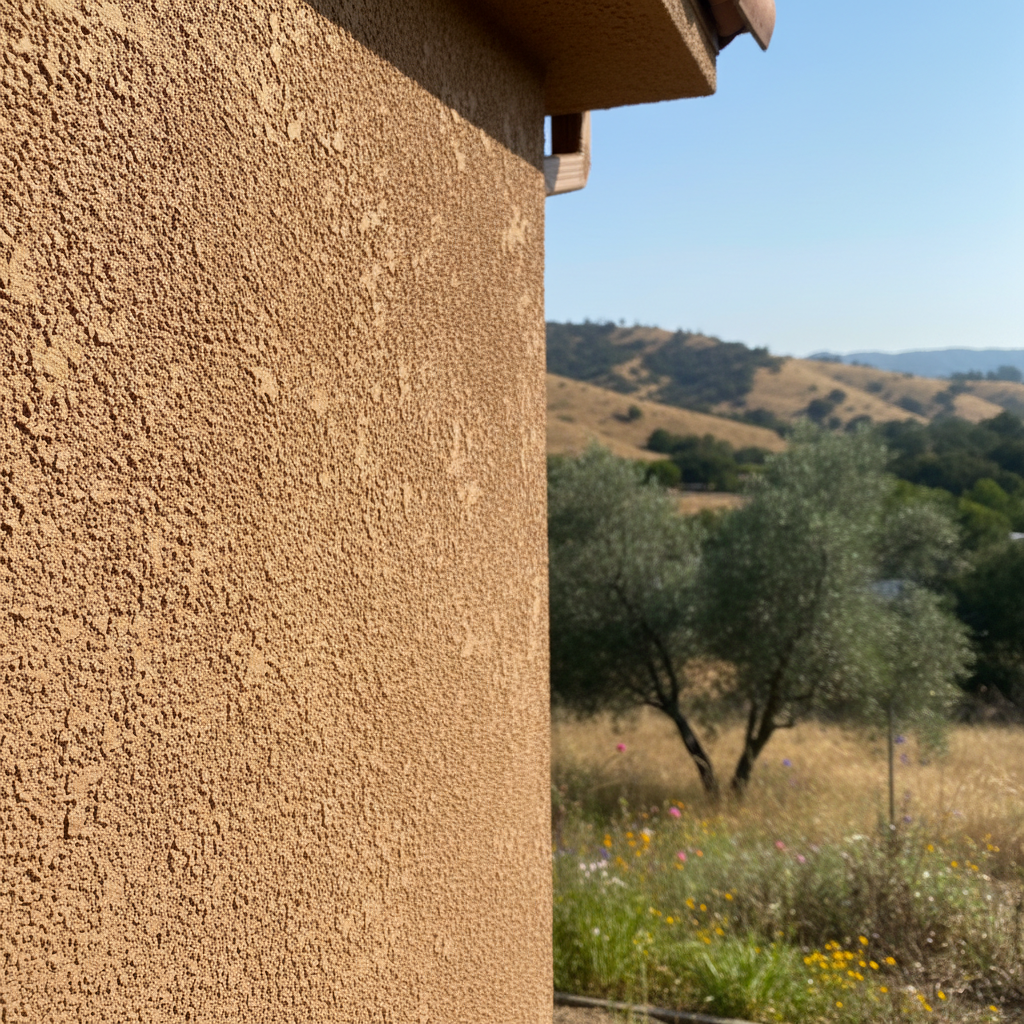
Your stucco takes a beating out here in the Temecula Valley. Between the blazing summer heat baking the walls in Paloma Del Sol and those sudden winter downpours rolling off the hills, exterior walls deal with thermal stress. Homeowners wait until a patch of wall crumbles before they pay attention, and by then, moisture has usually found a way behind the barrier. We can walk through how you can check your own home, what you can handle on a Saturday morning, and when it is time to call in someone from Temecula Stucco & Plastering to take a look.
Before You Start Looking: What You Need to Know
You do not need a cartload of fancy tools to do a basic walk-around of your house. Grab a clipboard, a pen, and a small plastic ruler or a coin so you can gauge crack widths. The key is understanding what normal settling looks like versus active damage. Our local soil tends to shift a bit as it cycles from bone-dry summer dust to heavy winter moisture, meaning hairline cracks happen. They are not always an emergency. But ignoring them lets rainwater seep right into the lath.
During the Walk-Around: What to Check
Start outside your front door and take it slow. Walk the perimeter and look closely at these specific areas:
- Around every single window frame and door jamb where movement creates gaps.
- The bottom six inches of the wall where it meets the concrete patio or soil, making sure sprinklers are not hammering the finish daily.
- Patches where climbing ivy or bushes have trapped humidity against the surface.
- Underneath roof overhangs and scuppers to check for hidden roof leaks.
If you see a crack, measure it. Hairline fractures under a sixteenth of an inch are usually straightforward to seal up with a bit of elastomeric patch if you are handy. Anything wider than a nickel, or any spot where the stucco sounds hollow when you tap it gently with your knuckles, crosses out of DIY territory. Hollow spots mean the finish coat has delaminated from the base layer, and a patch kit will not fix that structural failure.
After Your Inspection: DIY vs. Pro Call
Once you have circled the house, you will have a good idea of what you are dealing with. If you found a few minor shrinkage cracks near a window header, pick up a matching texture product from the local hardware store and seal them up before the next seasonal storm rolls through. Keep plants trimmed back a couple of feet from the exterior walls so air can circulate and dry out the morning dew. But if you uncovered crumbling corners, widespread staining that points to internal leaks, or large hollow-sounding sections, leave it alone. Fixing bad stucco over a compromised substrate is a waste of time and money. Give us a call at Temecula Stucco & Plastering, and we will come out to check the moisture levels, inspect the lath, and give you a straight answer on what it takes to protect your home for the long haul.